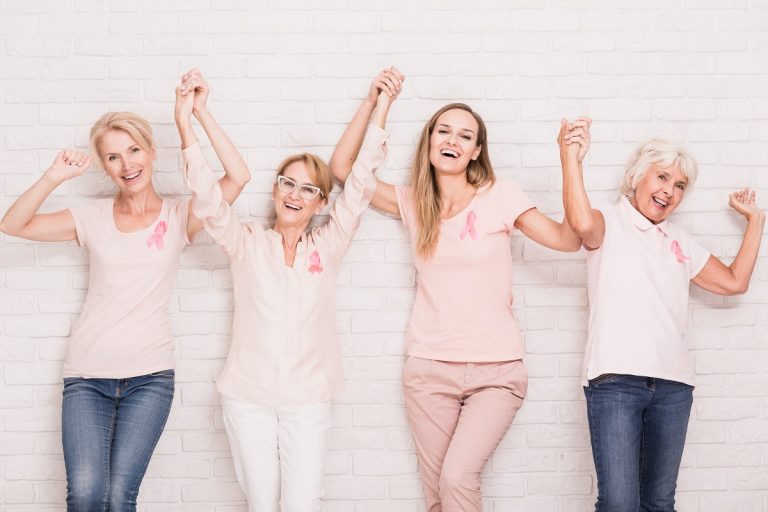
As part of the observance of International Women’s Day this year, the United Nations, has chosen “Equal rights, equal opportunity: Progress for all.” as its theme.  Sadly, in large measure  achieving these ideals is still very much a work in progress.

While to be sure, there has been much progress in the last few decades, women still hold only a small fraction of elected offices.  Women earn pennies on the dollar earned by their male counterparts while juggling the overwhelming burden of caring work for no pay at all.

In parts of the world, women are raped and murdered when they go to fetch water and firewood for their families.  Schools for girls are fire-bombed and acid is thrown in the faces of girls who have the temerity to want an education.

When women are raped, they are accused of being  adulterers and are stoned to death  or in other ways killed to salvage their family’s honor.  In many countries, young girls are still forced to undergo Female Genital Mutilation.

Abortion is still illegal, unsafe and/or inaccessible for many women and hundreds of thousands of women die unnecessarily from childbirth related reasons.  Women serving in the U.S. military are more likely to be attacked by fellow soldiers than by any enemy and women, particularly in Southeast Asia, are all too often victimized by sex traffickers and forced into prostitution near military bases or are trafficked into domestic slavery.

There is a word for this and it is misogyny.  Unfortunately, we live in a world where things mostly operate on the notion that power comes from winning battles and controlling resources and people.  Implicitly in such a system, you can not allow those you want to control to become equal.  And in this world, there is a long history of men asserting control over women.

The only way this changes is to redefine empowerment.  Imagine a world in which we lay claim to power that comes from the worthiness of how we conduct our own lives and how we connect with the world around us, rather than insisting that we must control things.  For there to be equality of rights and opportunity, that is the paradigm change we will need to make.  And in doing so, we can begin to become fully empowered and leave the damage of misogyny behind us.

HAPPY INTERNATIONAL WOMEN’S DAY!

The Feminist Peace Network is proud to participate in the Gender Across Borders Blog for IWD.  To read more more fabulous blogs, click here.  For more International Women’s Day coverage on the Feminist Peace Network, click here.

DeliciousFacebookGoogle+RedditStumbleUponTwitterPrintFriendlyEmailEvernoteDiggShare
 

It’s hard to know where to begin this week, so many fabulous events being planned all over the world, but first, from the vaults with gratitude to Iranian.com, check out this amazing footage of IWD in Iran in 1979:

You can see Part 2 of the footage here.

And how better to celebrate  IWD than 3 women, some cooking and a tub?

And from Spain:

They sing, they compose, they write, they paint, they dance, they act… In short, they create (Ellas Crean). Once again, and for the sixth consecutive year, the most important female festival of Spain celebrates the International Women’s Day. In this way important female figures of music, theatre, poetry, art and dance are going to lead us through different artistic and cultural proposals.

The festival will be included in the cultural programming of the Spanish Presidency of the European Union and will reach 20 cities on the five continents through the Instituto Cervantes. It is organized by the Ministry of Culture and Equality, and it will be held in Madrid from February 17th to March 30th.

In Nepal:

An FM radio station is to be operated for the first time in Parvat at the initiatives of women.

The Society for Uplift of Women is going to operate Radio Didibahini 95.2 Megahertz which will be totally operated by women journalists and RJs.

Chairperson of Society for Uplift of Women, Kalpana Chapagain said the managers, program presenters, technicians and employees of the radio station would be all women.

Radio Didibahini 95.2 Megahertz is starting its test transmission from February 27. This will be the second radio station to be operated by women after the Mukti FM of Butwal.

The FM radio station will be formally inaugurated on March 8 on the day of the International Women’s Day.

Via AWID:

Honoring the lives of feminist Haitian leaders who died in the massive earthquake on January 12th, will be the focus of International Women’s Day on March 8, 2010, which is also the 100th anniversary of this annual celebration…Women’s groups around the world are asked by the Haitian women’s movement to organize a memorial activity as part of their celebration of International Women’s Day in their countries and communities.
“The main activity will take place that day in Plaza Catherine Flon in Champ de Mars in the center of Port au Prince, a park that symbolizes Haitian women’s participation to the war towards independence two centuries ago.

It is being organized by the Haitian women’s organizations locally to acknowledge and honor the human suffering of the catastrophe in Haiti, promore feminist values based on the human rights of all, the struggle for well being of all in Haiti and urban planning, reaffirm feminist struggles despite the loss of significant feminist leaders, strengthen solidarity and display a MEMORIA which will take the form of testimonies, a mural and a slide show.

Local activities in other countries for March 8th have already been announced by women’s organizations in Chile, Argentina, Honduras, Puerto Rico, Brazil, Canada, etc.

The Feminist International Camp is also requesting a statement of solidarity from the Nobel Women’s Initiative.

The initiative to commemorate the 8th of March by honoring Haitian feminists emerged from a Haitian women’s meeting on January 24th in Port au Prince, which was then adopted at a Latin American and Caribbean meeting of the International Feminist Solidarity Camp Myriam Merlet, Magali Marcelin, and Anne Marie Coriolan, held in the Dominican Republic on January 26-27.

Finally, for all you bloggers, Gender Across Borders invites you to blog for International Women’s Day:

International Women’s Day [IWD] is on Monday, March 8, 2010. As set by the United Nations, this year’s theme is Equal rights, equal opportunity: Progress for all.” While we  here at GAB believe that equal rights for women should be celebrated every day, this particular event is a day for people to come together and blog about the progress of rights and opportunity for women worldwide.

This is the first year that we’re asking you (yes, YOU) to blog for IWD on March 8, 2010. Please take a moment to sign up using the form here and you can also download a Blog for IWD graphic to let readers know you’re participating. We ask bloggers to think about any of the following questions in regards to the U.N.’s theme for IWD:

  • What does “equal rights for all” mean to you?
  • Would you describe a particular organization, person, or moment in history that helped to mobilize a meaningful change in equal rights for all?

Once you sign up, a link to your blog’s URL will appear on the Blog for IWD blog directory page. Also remember to tag your posts as “Blog for IWD” or “Blog for International Women’s Day” so that we can identify your posts!

Please also visit FPN’s International Women’s Day webpage for more information about IWD and click here to learn why we are calling for a boycott of Thomson Reuter’s InternationalWomensDay.com website.

DeliciousFacebookGoogle+RedditStumbleUponTwitterPrintFriendlyEmailEvernoteDiggShare
 

Via Gender Across Borders,

Women forced into sex slavery in Japan during WWII, nicknamed “comfort women”, are still seeking an official apology from the Japanese government. These now elderly women, mostly from North and South Korea, are hoping for the official apology they have deserved for decades. It is estimated that up to 200,000 were forced into sexual slavery in Japanese military brothels during the war. Then opposition party leader, now Prime Minister of Japan, Yukio Hatoyama, stated in 2002 that the Japanese government should officially apologize to these women. Prime Minister Hatoyama has yet to deliver on his promise, but the women have reason to be hopeful.

The Korean Council for the Women Drafted for Military Sexual Slavery By Japan has put together a beautiful website that documents and memorializes the lives of the Comfort Women.  The site includes photos, artwork and written testimonies as well as a petition demanding Japan take responsibility for the crimes that were committed against these women.

Tu-ri Yun, 76 years of age, says in her testimony,

After a ride on the military vehicle, we arrived at the first comfort station in Yongdo, Pusan, at night. I begged them to take me back home since I already had a job, but in vain. There were 45 comfort women in that comfort station, all Korean girls.

I resisted and struggled against a soldier who seemed an officer, but ended up being raped there. My lower parts hurt for several days so much that I refused the soldiers coming to me, which got me badly beaten. I had to receive soldiers all day except at mealtimes. I must have had an average of 30-40 soldiers a day. In particular, on the days when a ship came in, there were more soldiers than usual. We had more soldiers during Saturdays and Sundays as well. When there were too many soldiers, I thought I was losing my mind. During busy days I could not even count how many soldiers I received, since one left then the other just came in. Even though I received so many soldiers, neither money nor army tickets were given or shown to me.

I didn’t get pregnant at the comfort station, but two of the comfort women got pregnant there. One of them died due to a botched abortion. The other became quite big with child, so she tried to kill herself, but was found by a soldier. She was sent somewhere else. I don’t know where she was sent. There was nobody who had a child at the comfort station.

In our period we were provided with gauze for sanitary napkins. We could use them while we did not receive soldiers. However, we had to receive them even during our periods, so there was no time to use the sanitary napkins. As long as we were alive, we had to receive soldiers, anyway. The disgusting and horrible conditions were certainly beyond description. During our periods, we put cotton rolled with gauze into the vagina and then received soldiers. The ones who got gonorrhea had an injection of the so-called number 606. The injection was as painful as if the arm were removed. I was also infected with gonorrhea at the comfort station. I went to hospital to get injections and had a lot of medicine. Even after leaving the comfort station, however, it recurred whenever I got weak.

Fifteen days after I arrived at the comfort station, I tried to run away from there. Even before getting several feet away, however, I was caught and beaten three times on my behind with a rifle and fell bleeding from my mouth. The beaten wound on my bottom festered and I had such a high fever that I could not even lie on my back. Even with my wound, I was forced to keep receiving soldiers. The flesh on my bottom kept festering and got rotten. Only after that, soldiers took me to hospital and cut the flesh off. I had three days off after the surgery. Three days later when the wound was not even healed and it was so painful that I could not lie down on my back, soldiers came to me. It was the hardest time. My behind was too painful to lie down, but I was forced to receive soldiers. It was so much pain. Every comfort woman in there wanted to run away, but after seeing that I was caught and beaten and suffered from the wounded, everybody just gave it up. Afterwards there was no one who tried to escape.

And yet Japan has still not apologized.

DeliciousFacebookGoogle+RedditStumbleUponTwitterPrintFriendlyEmailEvernoteDiggShare