Fair warning, this post should probably be sub-titled “Women’s Health Care, How Much More Seriously Effed Up Can It Possibly Get”

You would be in good company for instance if you thought Hormone Replacement Therapy (HRT) was no longer routinely considered an option for women going through menopause after we found out that when we quit taking it, breast cancer rates immediately fell–think again–Martha Rosenberg vivisects the New York Times for revisiting it as a medically acceptable option here.

And funny story, seems that never mind that we just spent how many months passing a watered down health care bill that was supposed to solve all our ills–getting and keeping health insurance while female is still some sort of Kafka-like joke.

WellPoint CEO Angela Braly got a 51% raise last year and now has a compensaton package that totals more than $13 million according to the LA Times.

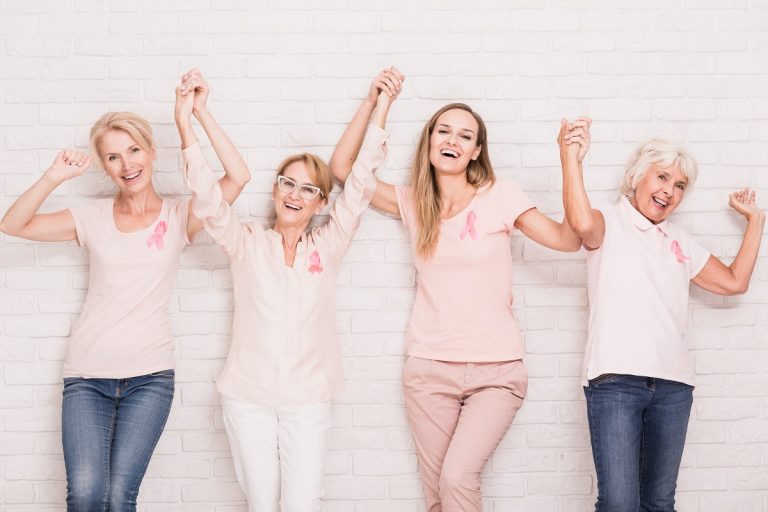
Got breast cancer, kiss your health insurance goodbye.  Via Reuters:

One after another, shortly after a diagnosis of breast cancer, each of the women learned that her health insurance had been canceled…
…None of the women knew about the others. But besides their similar narratives, they had something else in common: Their health insurance carriers were subsidiaries of WellPoint, which has 33.7 million policyholders — more than any other health insurance company in the United States.

The women all paid their premiums on time. Before they fell ill, none had any problems with their insurance. Initially, they believed their policies had been canceled by mistake.

They had no idea that WellPoint was using a computer algorithm that automatically targeted them and every other policyholder recently diagnosed with breast cancer. The software triggered an immediate fraud investigation, as the company searched for some pretext to drop their policies, according to government regulators and investigators.

Once the women were singled out, they say, the insurer then canceled their policies based on either erroneous or flimsy information.

Read the whole story, it gets much, much worse.  I particularly found this quote illuminating:

“It’s not like these companies don’t like women because they are women,” says Jeff Isaacs, the chief assistant Los Angeles City Attorney who runs the office’s 300-lawyer criminal division. “But there are two things that really scare them and they are breast cancer and pregnancy. Breast cancer can really be a costly thing for them. Pregnancy is right up there too. Their worst-case scenario is that a child will be born with some disability and they will have to pay for that child’s treatment over the course of a lifetime.”

No really, that is pretty much the same as hating women, at least until men start giving birth.  Pissed off (and if you aren’t, what the hell is wrong with you)?  Tell WellPoint what you think here.

(H/t to RH Reality Check for pointing to this story.)

Before we leave the subject of breast cancer profiteering, our friends at Breast Cancer Action are none too happy at Kentucky Fried Chicken’s form letter response to their protest of the KFC Buckets for the Cure pink-washing campaign. The response from KFC read in part,

“You should know that our partnership with KFC is designed to help reach millions of women we might not otherwise reach with breast health education and awareness messages which we consider critical to our mission. This additional outreach is made possible through KFC’s 5,300 restaurants (about 900 of them in communities not yet served by a Komen Affiliate).”

Breast Cancer Action’s awesome reply addresses the huge inequities in health and health care that exist because of poverty in this country, saying that KFC has:

targeted underserved communities whose residents often struggle to stretch their food dollars and are dependent on cheap meals. If you want to serve underserved communities, work with the community health clinics, economic development corporations, and community coalitions that are working to reverse the damage KFC and others have done.

KFC and other fast food restaurants are disproportionately located in low-income communities (especially those of color) for very specific reasons.

Low-income neighborhoods are underserved by grocery stores with healthier options, and therefore are “prime real estate” for fast food restaurants that provide inexpensive, already prepared options.  Faced with a lack of options, these already vulnerable communities are prey to large companies like KFC that offer the least amount of nutrition for the most profit.

In response to KFC’s claim that the campaign focuses on healthy diet choices such as grilled, not fried chicken, Breast Cancer Action declares bullshit:

By placing the responsibility for our crisis in diet on the consumer, they reveal a disturbing lack of insight and understanding related to social inequities in this country. This is shameful.
In addition, the claim that the partnership focuses on healthy options is outrageous. A menu with one or two salads does not a “focus” make! And it is equally outrageous that they claim to be educating people to make healthy food choices by encouraging them to eat at a fried chicken franchise.

KFC is currently embroiled in a suit related to their chicken’s high levels of PhIP, a byproduct of the grilling process listed on the state of California’s list of carcinogens.  While there is much that isn’t known about PhIP- Komen’s representative acknowledged that the NCI has not established safe or unsafe levels for its consumption- it seems both ridiculous and unethical to frame the breast cancer epidemic as something “curable” through repeated consumption of these ingredients. And in terms of prevention, we cannot imagine feeding people carcinogenic grilled chicken that raises the risk of heart disease and breast cancer and then expect them not to become sick.

Returning now to health care reform and the small issue of whether or not you can get affordable health care insurance in the first place, remember gender ratings–weren’t they supposed to be a thing of the past once we passed health care reform?  Maybe….eventually…

In the meantime, not to worry, Sue Lowden, a would-be challenger against Sen. Harry Reid in Nevada suggests that you can always barter for health care with chickens:

(Note:  For a hilarious response to Lowden that tells you how many chickens it will cost for your particular ailment, click here.)

And finally– just for the guys–want to get with the flow when it comes to your lady friend’s menstrual period–there’s an app for that, several of them actually, marketed specifically to menJodi Jacobson points out why, after 5 seconds of eye-rolling laughter there are a few ever so problematic aspects to this cutesy idea:

But that it is so popular is a reminder of our cultural schizophrenia around sex, power, and gender. On one hand, despite record numbers of sexually transmitted infections and despite still-too-high levels of teenage pregnancy, we can’t get the federal government to stop spending money on failed abstinence-only-until-marriage programs. Networks and cable stations will sell sex 24-7, but many still refuse to air responsible ads for contraceptive methods or such controversial things as condoms, or information about sexually transmitted infections…

…And it is worth noting the the current wave of laws at the state and federal level and the general level of hysteria around women’s rights to choose pregnancy and childbirth in the United States has a lot to do with control over their bodies…

…It is also worth watching how well this app does elsewhere in the world.  I am not kidding.  Yesterday, for example, a story on Apple’s first-quarter profits indicated that sales of the iPhone and iPad are booming in places like China, India, Pakistan and elsewhere.  These are cultures in which women’s periods are indeed more openly the source of control (here, we like to pretend we are protecting “life,” not controlling women’s lives.

Taken by themselves, every one of these stories is deeply troubling and messed up. While the profit opportunities (even with health care reform) abound, the reality is that our commodified health care system is damaging and too often deadly, especially for women.  Despite all the health care debate ruckus of the last year, we have accomplished very little.  Much, much more remains to be done, and the only starting point from which that can be accomplished is one that sees the health care of all as a human right, not a commodity that can be bought and sold.  And as of yet, there is no app for that.

DeliciousFacebookGoogle+RedditStumbleUponTwitterPrintFriendlyEmailEvernoteDiggShare
Mar 312010
 

Prior to the U.S. invasion of Afghanistan, we were told by President Bush that one reason it was important to send troops was to liberate Afghan women from the the Taliban.  We know now that was only a shameful excuse to justify an unjustifiable war.  But unfathomably, we continue to use women as pawns of war in Afghanistan.  Kathy Kelly reports that on February 12, 2010,

U.S. and Afghan forces raided a home during a party and killed five people, including a local district attorney, a local police commander two pregnant mothers and a teen-aged girl engaged to be married.  Neither Commander Dawood, shot in the doorway of his home while pleading for calm waving his badge, nor the teen-aged Gulalai, died immediately, but the gunmen refused to allow relatives to take them to the hospital. Instead, they forced them to wait for hours barefoot in the winter cold outside.

Despite crowds of witnesses on the scene, the NATO report insisted that the two pregnant women at the party had been found bound and gagged, murdered by the male victims in an honor killing.  A March 16, 2010 U.N. report, following on further reporting by Starkey, exposed the deception, to meager American press attention.

It was a lie in 2001 that ‘liberating’ women was a priority, and not only is it still a lie now, but we are also lying shamefully about our own guilt in the barbaric murder of innocent, pregnant women with the shameful complicity of our media.

At the same time, the New York Times reports that the CIA is proposing that Afghan women should be sent to European countries to explain why expected steep French and German casualties this summer are acceptable,

French voters could be made to feel guilty about abandoning civilians and refugees, while both nations’ electorates are reluctant to “disappoint” Barack Obama, it concludes.

Afghan women are “ideal messengers in humanizing the [international coalition] role” and should be put in front of European media for their “ability to speak personally and credibly about their experiences under the Taliban, their aspirations for the future, and their fears of a Taliban victory.”

Afghan women are not only losing their lives and human rights because of U.S. military actions but now we are asking them to support these ‘humanizing’ atrocities. Kelly also points to a Save The Children report that came out in early March reporting that,

“The world is ignoring the daily deaths of more than 850 Afghan children from treatable diseases like diarrhea and pneumonia, focusing on fighting the insurgency rather than providing humanitarian aid.” The report notes that a quarter of all children born in the country die before the age of five, while nearly 60 percent of children are malnourished and suffer physical or mental problems. The UN Human Development Index in 2009 says that Afghanistan is one of the poorest countries in the world, second only to Niger in sub-Saharan Africa.

The proposed US defense budget will cost the U.S. public two billion dollars per day. President Obama’s administration is seeking a 33 billion dollar supplemental to fund wars in Iraq and Afghanistan.

Meanwhile in this country we dither on how to afford healthcare and what to do about the economy. And we liberate Afghans by killing them with our bombs and standing by while their children die, unnecessarily, before the age of five.

We call that fighting terrorism and defending the homeland.  But we are not safer, and Afghani women and their children are not liberated. They are dead, wounded, and malnourished.  To  echo the words of Cindy Sheehan, what noble cause?

Our actions are an expensive, damaging lie and have become the embodiment of failed democracy.

DeliciousFacebookGoogle+RedditStumbleUponTwitterPrintFriendlyEmailEvernoteDiggShare
 

Okay, so wrap your head (and your heart) around this one

During the final debate on the bill, Congresswoman Lynn Woolsey, noting that prior pregnancies and Cesarean sections “and most unbelievable of all” domestic violence could be considered pre-existing conditions, said, “We should all be ashamed.”

The bill should change this, which is more than good. (It’s not clear that the fix will be instant; exclusions for pre-existing conditions are set to end in 2014, although in the interim insurance should be available through a high-risk pool.) Despite the regrets about public options, the bill is sounding better all the time.

So do we have to wait until 2014 for domestic violence to not be an impediment to obtaining insurance?  The way the high risk pool is set up, you first have to be uninsured for 6 months (and will someone please explain how the ugliness of that black hole got into any of this)–so if you get raped during that 6 months, are you sh*t out of luck??  If anyone knows more about this, please share your understanding, I’d like to be wrong about how I’m reading this, but I have a bad feeling I’m not.

DeliciousFacebookGoogle+RedditStumbleUponTwitterPrintFriendlyEmailEvernoteDiggShare
 

Not Under The Bus has declared today a day of action to fight for a woman’s right to an abortion.  They have an entire page of things that YOU can do from signing petitions (too many to list here) to writing to your Congressional representative to writing an OpEd for your local paper.

While women’s groups throughout the U.S. are focusing on the abortion issue, it is important to remember that this is not the only aspect of women’s health that is in jeopardy.  The National Partnership for Women and Families has prepared an excellent brief about the proposed wellness provisions that could effectively become a backdoor for rate discrimination against lower income women who are not able to participate in these programs because:

A disproportionate number of women head low-income families and are unable to pursue daily exercise programs when faced with significant caregiver responsibilities at home;

A disproportionate number of women are in low-income families and are unable to access safe areas for physical activity or affordable healthy food choices; and

Many of the most vulnerable women and children who would benefit greatly from assistance in living healthier lives are ill-prepared to sustain the added financial burden that arises from paying significantly more for health insurance under the current “20 percent” standard.

They conclude:

There is no doubt that women want their families and themselves to be healthy.  Every day, women are leading the charge for improving health across the country.  But what women also need is support to achieve healthy lifestyles — not a policy that allows their employer to discriminate against them based on their health status (or a family member’s health status).  This kind of policy undermines the very goals of health reform.  Instead, employers should be encouraged to provide wellness incentives that treat women equitably and respect the challenges they face in meeting the dual demands of work and family.

Gwendolyn Mink and Dorothy Roberts also point to concerns regarding nurse home visitation programs aimed at low-income pregnant women and mothers of young children, saying they are,

concerned that the provision is not aimed at providing health care. Instead, it pledges to advance goals that endanger the reproductive and family freedoms of low income women, conjures stereotypes of low income women of color, and implies that using available public services is a bad thing. The Senate bill contains a similar provision.

They go on to say that,

It is imperative that a government-sponsored home visitation program for low-income women amply and explicitly protects program clients.  Express stipulations to assure that participation is voluntary must be part of the statutory package, along with a guarantee that a decision to participate, or not to, cannot be made a condition of receiving other government assistance.  The aim of nurse home visitation programs should be to provide medical and wellness services;  neither the statutory language nor administrative regulations should permit or encourage monitoring the family and reproductive decisions of individuals, and neither should denigrate low-income mothers for using public assistance.  We should do everything possible to ensure that these programs support the women they are intended to serve rather than using women to advance the interests of government.

Whatever action you decide to take today, be sure make clear that women’s health care  must include not only access to affordable, safe and legal abortion, but also to full reproductive health care and affordable, non-discriminatory overall health care.

__________

Many thanks to Adele Stan for drawing our attention to the wellness program issue.

DeliciousFacebookGoogle+RedditStumbleUponTwitterPrintFriendlyEmailEvernoteDiggShare
 

Shortly before the Senate approved its version of  health care reform legislation, I quiped that I was re-reading Margaret Atwood’s The Handmaid’s Tale in order to get psyched for the vote.  Truthfully, it was only partly said in jest.

The hijacking of abortion rights as a bargaining chip for the provision of health care is morally reprehensible and if it stands will result in significant harms to women’s health. As women’s health advocates are working full tilt to try to stop this from happening, there is an uncomfortable sense of having been here before.  How is it  possible that we have to fight  for the right to choose to have an abortion all over again?

Blasphemous as it might sound, I think that part of the problem is the word choice, which sounds ever so frivolous compared to the right to life.  We’re not deciding which pair of shoes to buy. We are fighting for the human right to make decisions about our own  lives.  Full stop. As M. Gabriela Alcalde, Director of the Kentucky Health Justice Network told me in an e-mail correspondance,

We should stop talking about the morality of individuals and think about the morality of not providing necessary health care to individuals and communities.  Government’s job is to worry about systems working, government’s moral obligation is to assure that groups or classes of people are not excluded from society’s benefits or carry disproportionately society’s burdens.  Abortion is necessary when seen from a public health perspective.  In countries where it is illegal, maternal mortality is higher, infants are abandoned at higher rates (look at Romania), and overall maternal and child health is compromised.

Just as critically, we need to not lose sight of the  fact that abortion is only one aspect of reproductive rights. There are many other aspects to women’s health care in addition to abortion that need to be assured.  According to Alcalde,

Abortion should not be thought of separately from prenatal care, birthing, and other reproductive and maternal health services and experiences.  separating it from the experience of pregnancy in general is a huge mistake.

As I’ve noted before,  according to the National Women’s Law Center,

Maternity coverage continues to be largely unavailable in the individual health insurance market, with virtually no improvement in access to this essential health coverage from 2008 to 2009. NWLC examined over 3,600 individual health insurance policies offered to 30-year-old women living in capital cities across the country for 2009, and found that only 468 of those plans—or 13%—include any coverage for maternity care.

NWLC also notes that only the current House bill prohibits the treatment of domestic violence as a pre-existing condition and that there are still very significant concerns about the affordability of health care which is more likely to impact women, who earn less than men and are less likely to be covered through an employer.

While these are the primary issues that are on the table in regard to the current  legislation, the reality is that there are other significant women’s reproductive health issues that need to be addressed.

In, “Sowing The Seeds Of Reproductive Justice In Kentucky” (Collective Voices, Fall, 2009), Alcalde points for instance to problems faced by Latina women,

Some reproductive health challenges that Latinas face once in the U.S. include a high uninsured rate, low prenatal care rate, high and rising HIV/AIDS rates, high maternal mortality rate, high cervical cancer rate, and a high unintended pregnancy rate.  Additionally, Latinas have a lower contraceptive use rate and have a higher contraceptive failure rate than other groups of women in the U.S..

Other issues that come to mind include the high c-section rate in the U.S., affordable contraception on campuses and access to rape crisis and abortion services in the military, and the insistence in many parts of the country on the use of doctors (inevitably in high cost hospital settings) instead of midwives to deliver babies.

One of the critical mis-steps in the health care debate was the reduction of the issue to  one of insurance coverage rather than health care provision.  In regards to women’s health, additional damage has been done by allowing abortion to be addressed separate from the overall issue of reproductive health.

In “How To Talk About Reproductive Justice” (Collective Voices, Fall, 2009), Loretta Ross provides a useful framework for a more comprehensive solution when she defines reproductive justice as, “the right of every human being to have a child, not have a child, and parent a child.”

We  need to insist that abortion not be held hostage, nor can we allow it to be split  apart from the right to full reproductive health rights for all women at a fair and equitable price.  That abortion is being used as a bargaining chip for these basic human rights  is a bald effort to control women’s lives and is unacceptable.

To fully understand this patriarchal power play, it is useful to look at the current health care reform debate from a global context.  These are but a few examples:

1.  While the population control drumbeat gets louder as we become more aware of the implications of climate change, it bears recognition that we are very callously already practicing exactly that by the denial of the relatively small amounts of money that it would take to eradicate maternal mortality which claims the lives of more than half a million women every year throughout the world.

“Every hour of every day in DRC, four women die from complications of pregnancy and labour, and for every woman who dies, between 20 and 30 have serious complications, such as obstetric fistula, which is very common in DRC,” said Richard Dackam Ngacthou, country representative of the UN Population Fund (UNFPA). For every 100,000 live births 1,100 women die, he said.

But to meet a national target of reducing the number of women who die in childbirth by 75 percent and to provide all Congolese with access to contraception – in line with the UN Millennium Development Goals – new funding targets must be achieved.

The funding gap is severe: in 2008 some US$5 million went towards the fight against maternal mortality, whereas in 2009 less than $2 million was allocated. Congo’s 2010 budgetary situation is no less dire, with only around $6 million planned to finance the entire health sector, where some $60 million would be warranted, according to a member of parliament.

2.  In South Korea a new policy is effectively coercing women into having children:

On Dec. 9, Sungshin Women’s University in Seoul organised an event titled, ‘Happy Childbirth – Rich and Strong Future’, aimed at trying to raise awareness about the country’s very low birth rate. It sparked controversy when the organisers requested women students in the audience to submit a sworn statement that they would have children.

A fourth year student who prefers to remain anonymous, told IPS “the organisers almost forced female participants to write a sworn statement for childbirth despite many participants asserting that the low birth issue is a social problem rather than mere individual choice.”

South Korea’s birth rate – 1.19 in 2008, according to the Korean Statistical Information Service, is the lowest among OECD countries – has been in the news recently.

In November, the government’s Presidential Council for Future & Vision announced “comprehensive plans for low birth rate.”

The plans include a crackdown on abortion.

3.  And in countries such as China and India, there has been a systemic campaign of favoring the births of male children over females:

There are about 100 million women less on this earth than there should be. Women who are “missing” since they are aborted, burnt, starved and neglected to death by families who prefer sons to daughters. This column had also identified the countries of South Asia, East Asia, West Asia and Saharan Africa as the main regions which were missing most of these women. The estimated number of women who are missing are 44 million in China, 39 million in India, 6 million in Pakistan and 3 billion in Bangladesh. This is the single largest genocide in human history. Ever. Some researchers have coined a word for this phenomenon: Femicide, or the killing of the human female because she is female. (Note:  see also here and here.)

Until we insist that it cannot be considered separate of the overall issue of reproductive health, abortion rights will continue to be in jeopardy. Health care, including full reproductive health care, is a human right, not a commodity to be controlled or bartered away by the governments we elect to represent us.  Yet clearly that is exactly what is happening not only here but in many parts of the world. Our current reality is not so far from Atwood’s dystopia as we might like to think.

DeliciousFacebookGoogle+RedditStumbleUponTwitterPrintFriendlyEmailEvernoteDiggShare