Judy Rebick reflects on feminism:

In the end, my conclusion is that the inter-locking systems of patriarchy, colonialism and capitalism will maintain the oppression of women.  There is only so far we can go without challenging all of them.  That’s why I am thrilled to see the women’s movement become more global, more diverse, more radical and more integrated into other movements for social and environmental change.  Even if in the short time, we are less effective in making change, in the long term the change will be deeper and broader.

From Madre:

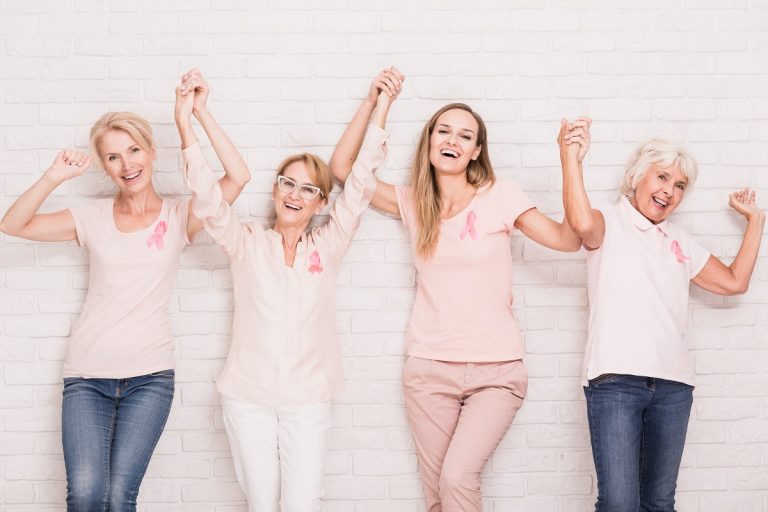
Honoring the lives of feminist Haitian leaders who died in the massive earthquake on January 12th, will be the focus of International Women’s Day on March 8, 2010, which is also the 100th anniversary of this annual celebration.

The main activity will take place that day in Plaza Catherine Flon in Champ de Mars in the center of Port au Prince, a park that symbolizes Haitian women’s participation to the war towards independence two centuries ago.

It is being organized by the Haitian women’s organizations locally to acknowledge and honor the human suffering of the catastrophe in Haiti, promore feminist values based on the human rights of all, the struggle for well being of all in Haiti and urban planning, reaffirm feminist struggles despite the loss of significant feminist leaders, strengthen solidarity and display a MEMORIA which will take the form of testimonies, a mural and a slide show.

Women’s groups around the world are asked by the Haitian women’s movement to organize a memorial activity as part of their celebration of International Women’s Day in their countries and communities.

Tamar Abrams asks us to focus our attention on ending maternal deaths this IWD:

We mustn’t let this critical discussion get bogged down in ideology about abortion or contraceptives or politics. I challenge you to look into the eyes of your own mother or sister or daughter on March 8 and say, “Sorry, maternal deaths are simply not a prority.” Or you could join me in celebrating International Women’s Day with a pledge to invest in the health and well-being of women.

Oxfam has this round up of news items that includes this thought-provoking tidbit:

The UN estimates that women grow more than half of all the food in the world. In sub-Saharan Africa and the Caribbean, they produce up to 80 percent of basic foodstuffs. In Asia, they account for around 50 percent of food production. Despite their contributions to the global food supply, women farmers are often undervalued and overlooked in agricultural development strategies.

From the U.N. a status report on UNSCR 1325:

(T)he record of implementing resolution 1325 has fallen markedly short of expectation. As the 10 year anniversary approaches, women and girls continue to be victims of gender-based violence, especially sexual violence, during armed conflict and in post-conflict settings. They are raped, tortured, abducted and humiliated, and many are ostracized after the conflicts end because they either have been abused or have become pregnant. In this regard, implementing resolution 1325 cannot be seen in isolation from Security Council resolutions 1888 and 1820 (adopted in 2008 and 2009 respectively) since resolution 1325 focuses on the operationalization of resolution 1820. Through these resolutions, the Security Council sent a clear message that sexual violence in situations of armed conflict will not be tolerated.

Cessation of hostilities does not often guarantee an end to violence against women and girls. On the contrary, evidence shows that even after conflict has ended, high levels of sexual and gender-based violence tend to persist, creating long-term threats to security and to women’s health, livelihoods, and their ability to participate in reconstruction and peacebuilding efforts.

The persistence of violence against women in situations of armed conflict detracts from the achievement of the Millennium Development Goals (MDGs), whose targets in many ways are intertwined with the goals of resolution 1325. If girls live in fear of attending school because of the heinous violations that are often typical in armed conflicts, their access to education will remain unequal to that of boys and compromise MDG 2: achieving universal primary education. Sexual violence during armed conflict carries high risks of HIV infection and threatens the achievement of MDG 6: combatting HIV/AIDS, malaria and other diseases. Achieving MDG targets will also be irrelevant to the women and girls whose human rights are persistently violated by gender-based violence which has become an inseparable part of armed conflict today. Indeed, the achievement of MDG 3: promoting gender equality and empower women, requires the global community to intensify action to ensure that women’s bodies are no longer an extension of the battleground during periods of armed conflict.

DeliciousFacebookGoogle+RedditStumbleUponTwitterPrintFriendlyEmailEvernoteDiggShare

Sorry, the comment form is closed at this time.